RAVEN
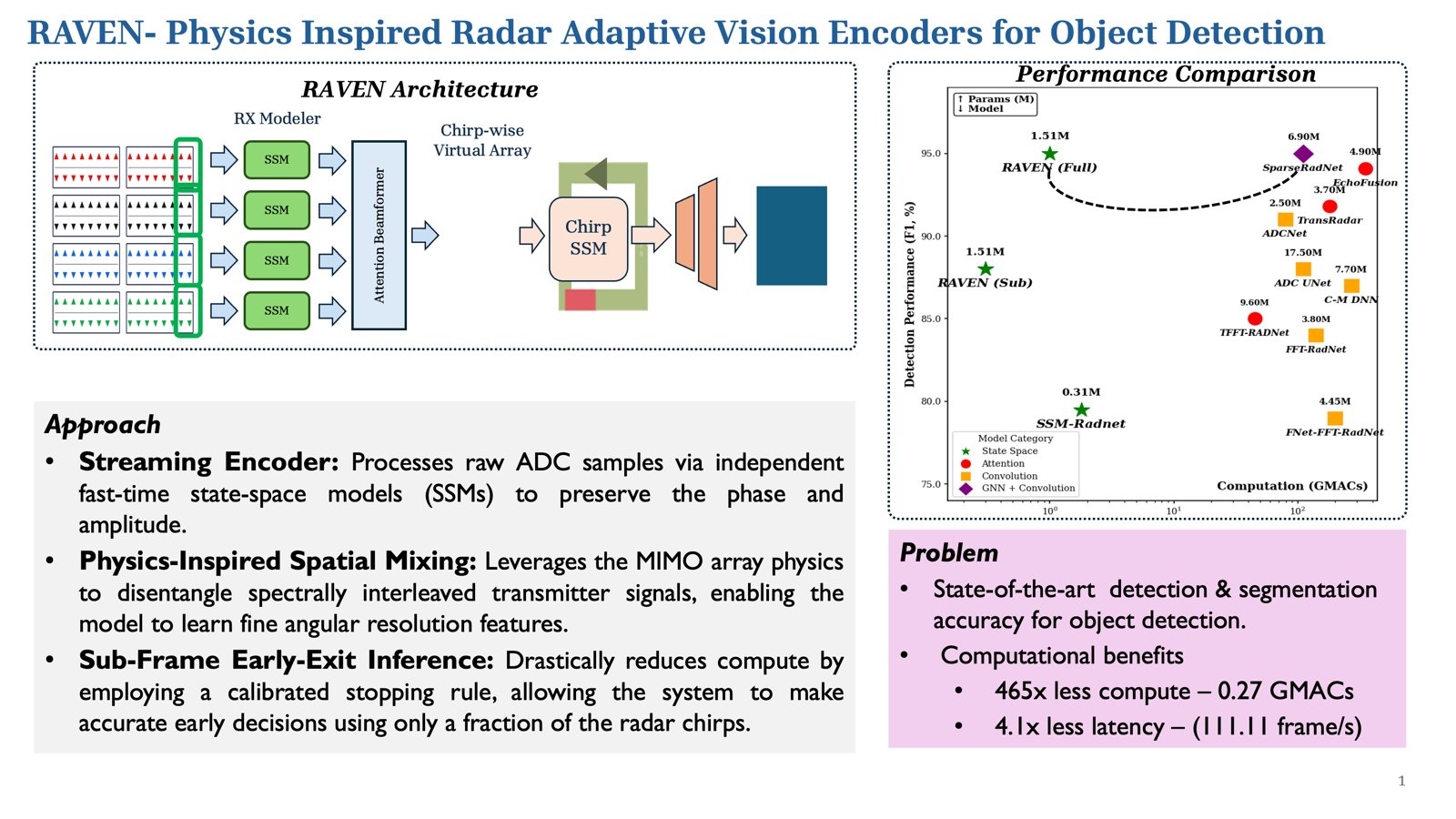
compute
parameters
hardware
Live Demo
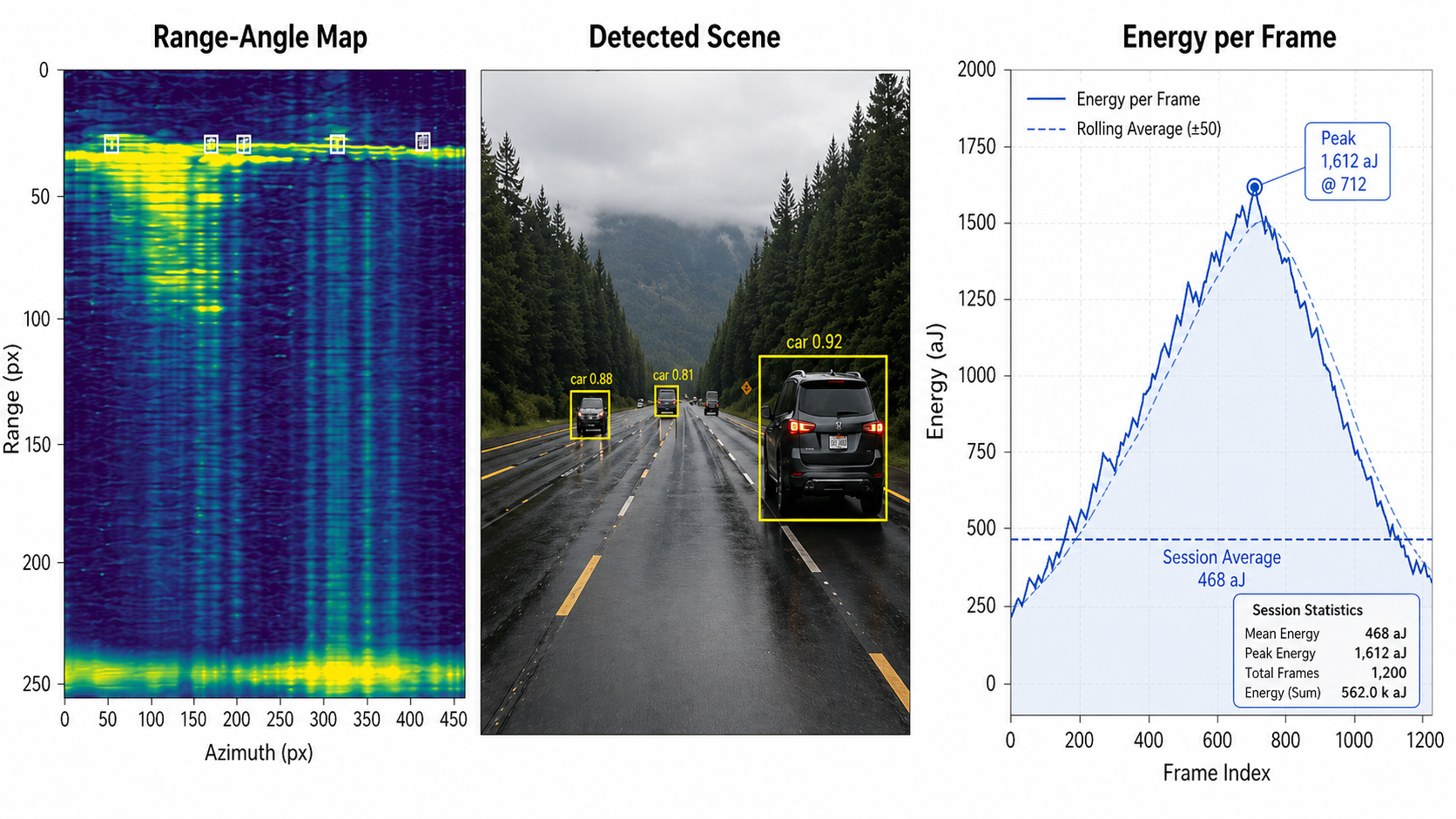
Attendees walk in front of the radar and see themselves detected in real time. The dashboard streams three views simultaneously: a camera feed with RAVEN's BEV detections overlaid, the radar-only detection output in a bird's-eye view, and a live energy-per-frame plot showing how the adaptive early-exit rule saves compute on simple scenes and ramps up only when needed.
Architecture
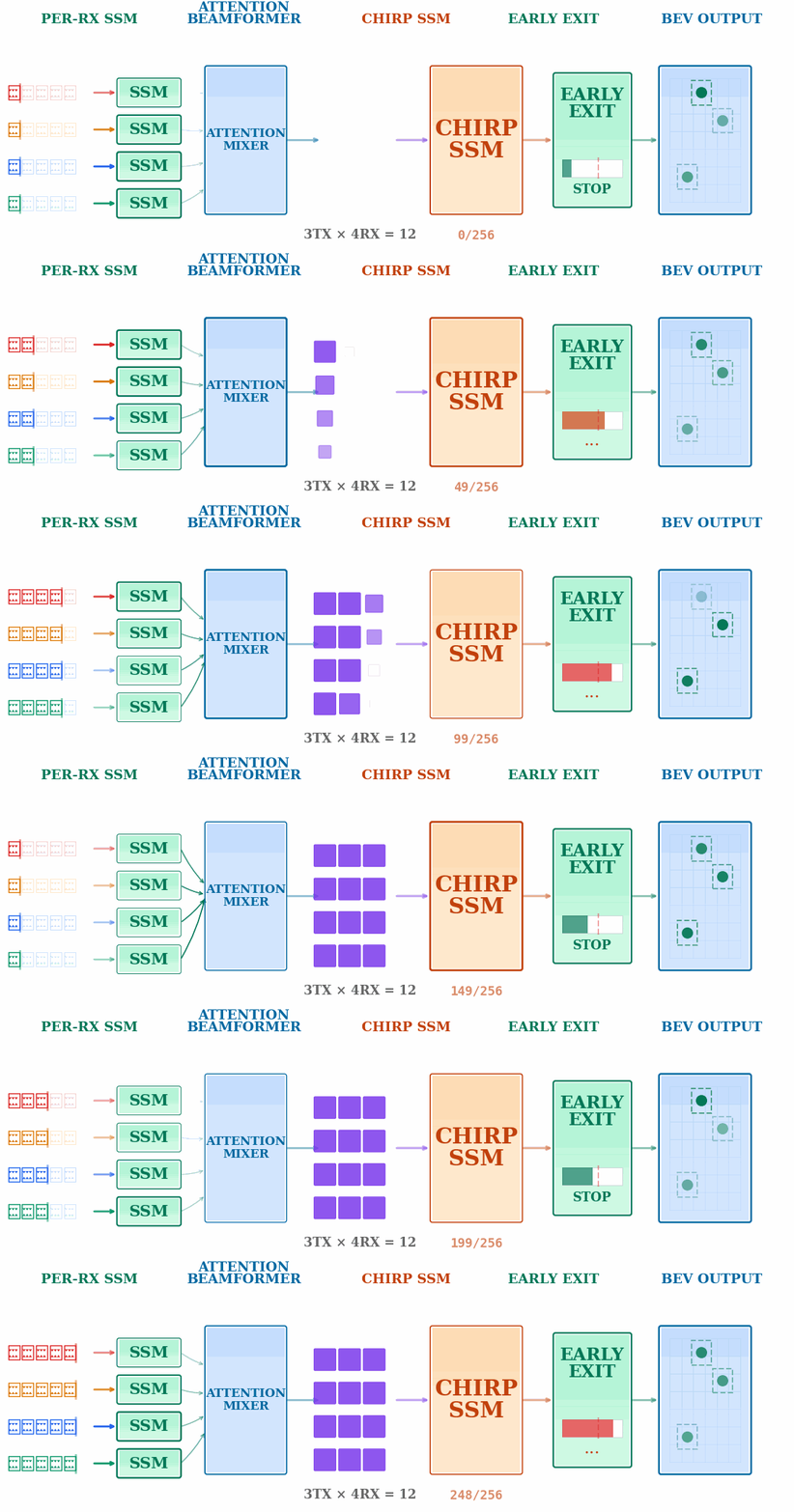
RAVEN processes the channel-wise sampled radar signal directly, without ever forming the full range–angle–Doppler cube. Per-receiver state-space encoders preserve antenna-level phase structure; a cross-antenna attention beamformer fuses them into a chirp-wise virtual array; and a slow-time chirp SSM produces the final detection and segmentation maps. The streaming design supports anytime inference — the model can emit a decision after any chirp prefix once the latent dynamics have saturated.
Hardware
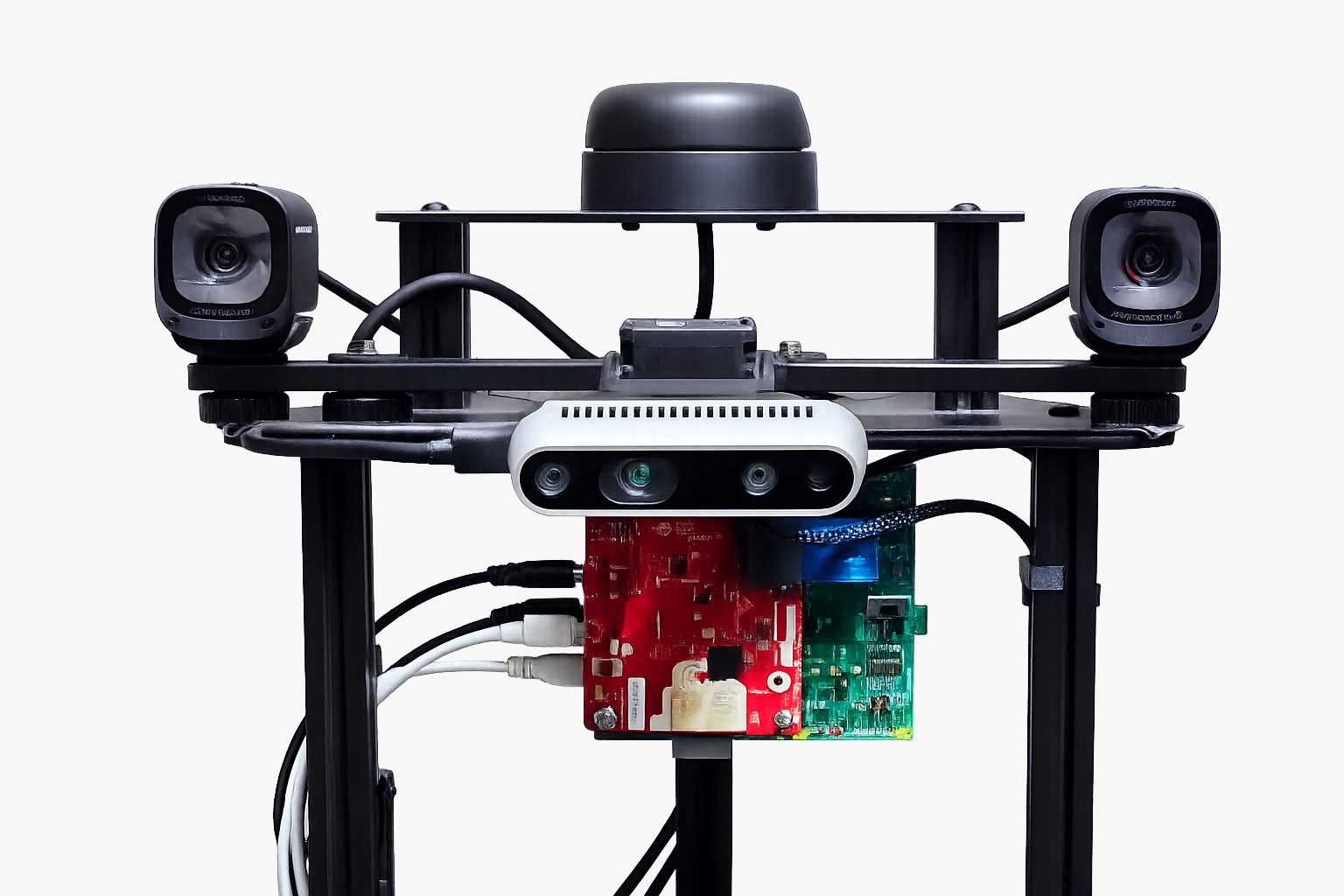
Based on availability, the demo runs on either a LoCoBot WX250s mobile robot or a laptop, streaming raw ADC data from a TI IWR1843BOOST 77 GHz FMCW radar over a DCA1000EVM capture card. End-to-end inference happens on the edge — no cloud, no GPU cluster.
LoCoBot WX250s
Mobile robot with 2D LiDAR, RGB-D and stereo cameras, plus an Intel i3 edge processor — the platform we deploy RAVEN on for live demos.
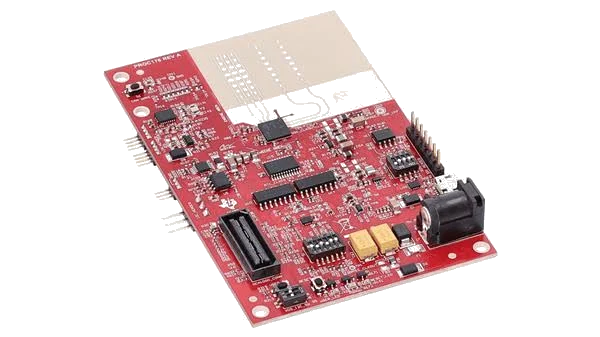
TI IWR1843BOOST
76–81 GHz FMCW radar-on-chip — 3 TX, 4 RX, 12 virtual elements in TDM-MIMO, with up to 4 GHz of chirp bandwidth.
Results at a Glance
RAVEN delivers state-of-the-art detection and segmentation on both major automotive radar benchmarks while using orders of magnitude less compute than prior radar perception models — making it the first practical fit for always-on edge deployment.